
Main Vaapas Aaunga Review: Is Imtiaz Ali’s Emotional Drama Worth Watching?
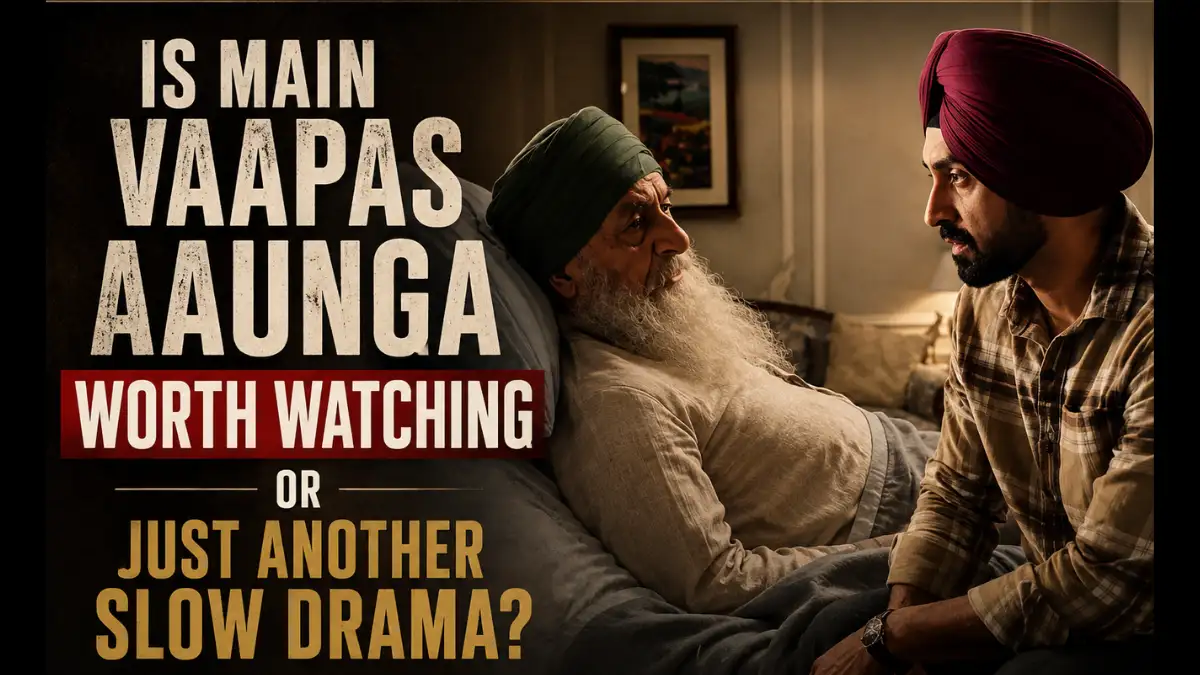
Imtiaz Ali’s Main Vaapas Aaunga is not the kind of film that rushes to entertain you in the first ten minutes. It settles in slowly, like a memory resurfacing after years of silence. Starring Diljit Dosanjh, Naseeruddin Shah, Vedang Raina, and Sharvari, the film explores Partition trauma, identity, longing, and the strange ways the past refuses to leave us.
Quick Summary
- Genre: Historical drama / emotional family saga
- Director: Imtiaz Ali
- Cast: Diljit Dosanjh, Naseeruddin Shah, Vedang Raina, Sharvari
- Core theme: The emotional aftermath of Partition and how memory shapes generations
- Overall verdict: A moving, beautifully acted film that occasionally becomes too restrained for its own good
What the Film is About
The story moves between past and present, following characters whose lives are shaped by the scars of Partition. Rather than focusing on large political events, the film stays intimate – conversations, silences, family tensions, unfinished promises, and the ache of displacement.
Diljit Dosanjh plays a man caught between inherited pain and present-day responsibility, while Naseeruddin Shah brings gravitas to the older generation that actually lived through the upheaval. Vedang Raina and Sharvari represent the younger generation trying to understand emotions they never directly experienced.
The film’s title – “I Will Return” – becomes less about a physical return and more about memory returning again and again.
The Best Parts of the Film
| Aspect | Why it works |
|---|---|
| Performances | Diljit Dosanjh delivers one of his most restrained and mature performances, while Naseeruddin Shah is quietly devastating in emotional scenes. |
| Atmosphere | The film creates a haunting sense of nostalgia and loss without becoming melodramatic. |
| Writing | Many conversations feel natural and lived-in, especially family interactions. |
| Music & Sound | Imtiaz Ali uses music sparingly, which makes emotional moments land harder. |
| Themes | It treats Partition not as history-book tragedy, but as inherited emotional memory. |
What doesn’t work as well
| Issue | Why it feels weak |
|---|---|
| Pacing | The film is very deliberate, and some stretches feel too slow, especially in the middle act. |
| Emotional distance | Its restraint is admirable, but a few scenes could have used more emotional release. |
| Supporting arcs | Vedang Raina and Sharvari’s characters are interesting, but the script does not explore them deeply enough. |
| Climactic payoff | The ending is thoughtful, but some viewers may expect a stronger emotional crescendo. |
What Could Have Been Better?
- Tighter editing: Trimming 15–20 minutes from the middle portion would have improved momentum.
- Deeper younger-generation perspective: The film hints at intergenerational trauma, but it could have explored how younger characters actively process that legacy.
- More visual contrast between timelines: At times, the transitions between past and present feel too similar in tone and texture.
- A stronger final emotional release: The climax chooses subtlety over catharsis; a slightly bolder emotional payoff could have made the ending more unforgettable.
The Performances
- Diljit Dosanjh Surprisingly understated. He avoids his usual charm-heavy persona and plays the role with quiet weariness. His eyes do a lot of the acting here.
- Naseeruddin Shah as expected, he elevates every scene he is in. There’s a heartbreaking dignity in the way he portrays aging memory and unresolved grief.
- Vedang Raina & Sharvari both are sincere and believable, but the script gives them less room to shine compared to the older characters.
How it Compares to Typical Partition Dramas
Unlike many films set around Partition, Main Vaapas Aaunga is not driven by violence, spectacle, or political speeches. It is quieter and more interior. That makes it feel more personal, but also less immediately gripping for viewers expecting a sweeping historical epic.
Final Verdict
3.5/5
Main Vaapas Aaunga is a thoughtful, emotionally intelligent film anchored by strong performances and a haunting atmosphere. It succeeds most when it focuses on small human moments rather than grand historical commentary. However, its slow pacing and restrained storytelling may test the patience of viewers looking for a more dramatic narrative.
If you appreciate reflective cinema about memory, family, and history’s emotional residue, this film is worth watching. If you prefer fast-paced dramas with big emotional highs, it may feel a little too subdued.
In one line: A quietly powerful meditation on Partition’s lingering wounds, carried by excellent performances and a deeply melancholic tone.
Sources and Additional Reading
If you’re interested in exploring different perspectives on the film, several leading publications have also discussed its emotional storytelling, themes of memory and longing, and its portrayal of Partition’s lasting impact. Their reviews offer additional insights into the film’s strengths, performances, and narrative approach.
- Read more about the film’s focus on memory and longing over spectacle.
- Explore its portrayal of Partition trauma and generational pain.
- Discover why many critics praised its emotional depth and unforgettable performances.